Independent Australia
03 Dec 2025, 02:30 GMT+10
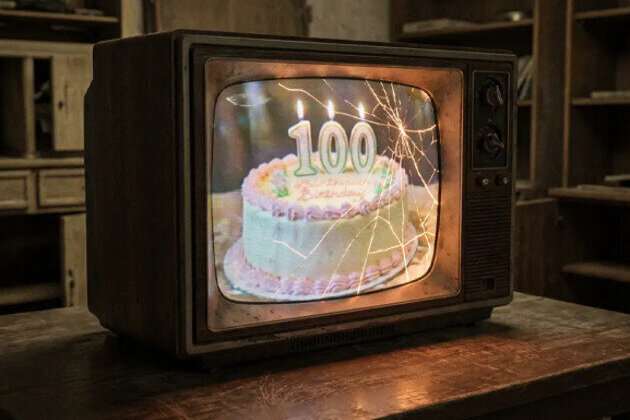
As television celebrates its centenary, the screen that once united the world now reflects a fractured, algorithm-driven society, writesPaul Budde.
WHENJohn Logie Baird(from the Logie Awards) transmitted the first recognisable television image in October 1925, he launched a technology that would shape the next century more profoundly than radio, newspapers or even the early internet.
For decades, television unified societies. Today, as it turns 100, it increasingly mirrors our divisions. And with the rise of AI-driven video, it is not at all clear that the next century of television will strengthen democracy rather than undermine it.
Televisions early decades were defined by a sense of public trust. In Australia, theABCs arrival in 1956created a national focal point in a rapidly modernising country. News presenters were authoritative. Election nights represented shared civic rituals. Even commercial channels helped forge the cultural references that gave Australians a sense of common identity.
Television was not perfect, but at its best, it was a democratic medium.
Internet dominates the way we watch TVInternet TV and subscription streaming services have taken over as the leading way consumers watch TV, according to a new survey.
This consensus did not survive the digital revolution. Cable and satellite fragmented the mass audience, but it was broadband streaming that broke the monoculture entirely.Netflixs international expansion in 2010marked the transition from a shared public sphere to a world of personalised entertainment. Instead of a nation gathered around a single broadcast, we now inhabit separate algorithmic bubbles where no two households receive the same cultural diet.
Young people may never again experience the collective shock of a major breaking news event or the communal joy of a grand final watched in real time nationwide.
The result is a subtle but measurable loss of cultural cohesion. Television once anchored public understanding; today it competes with an unregulated torrent of online video where facts, fiction and political manipulation blur. Traditional broadcasting still commands trust, but its influence is diluted in a sea of hyper-personalised streams designed to keep users clicking, not keeping societies informed.
Artificial intelligence is accelerating this shift. Arecent ITU articlemarking the centenary of television notes that AI now excels at cataloguing content, personalising guides and creating accessibility tools such as automated captioning and sign-language avatars, which triggered me to write this article.
I see them as genuinely important advances, particularly for ageing populations and people with disabilities. But the same technologies also power deepfakes, synthetic newsreaders and political persuasion engines. AI nowcreates actorsand (adult) films are already being produced by using AI. This will set the scene for other films, miniseries and different forms of content.
Furthermore, AI enables micro-targeted propaganda, algorithmically tailored misinformation and the erosion of baseline reality.
This is no longer science fiction. In several countries,synthetic political videosare already circulating with minimal transparency. AI-generated commentary, doctored footage and fabricated live broadcasts are becoming easier to produce and harder to detect.
Unlike earlier forms of media manipulation, AI video can be created at scale, in real time and delivered directly into personalised media feeds without any editorial oversight. If the last century of television taught us the importance of public trust, the next century is shaping up to test whether trust can survive.
Users in control as streaming giants dominate TV marketAs traditional broadcast TV fades into obscurity, digital services offer plenty of reasons for consumers to keep up with new technology.
Meanwhile, the technical form of television is undergoing its own transformation. Hybrid systems such asBrazils TV 3.0and theATSC 3.0 standardin the United States merge broadcasting with broadband in the same device.Japans NHKis experimenting with real-time AI-generated sign language. European trials ofNative IP Broadcastingare exploring fully internet-based public channels.
These innovations promise flexibility and inclusiveness, but they also reinforce a shift from universally transmitted broadcasts to individually shaped experiences. When every viewer receives a customised version of the same programme, what happens to the shared narrative that once held societies together?
Australia faces this dilemma acutely. While our traditional broadcasting networks remain strong, they coexist with global platforms whose algorithms are optimised for engagement, not democratic health. A century ago, television was a communal medium; now it is a contested one.
The battle for attention is also a battle for truth and the platforms delivering video to our screens are increasingly opaque about how decisions are made.
Televisions first century was a story of connection. It informed, entertained and, at critical moments, held democracies together by providing a common view of the world. Its second century risks becoming a story of fragmentation unless governments, regulators and citizens confront the forces reshaping the medium.
The challenge is not simply technological. It is political and cultural how to ensure a resilient public sphere when personalised media constantly pulls us apart.
Yet television still offers hope. In moments of crisis, people still turn to live broadcasts for clarity. Public broadcasters continue to play a crucial role in maintaining democratic accountability. Accessibility technologies promise to widen participation, not narrow it. And the basic human need for shared stories remains unchanged.
Television at 100 is both a triumph of engineering and a warning about the future. If it is to remain a democratic force rather than an algorithmic battleground, we must treat media integrity as a public good. Otherwise, the screen that once connected societies may become the tool that fractures them beyond repair.
Paul Buddeis an IA columnist and managing director of independent telecommunications research and consultancy,Paul Budde Consulting. You can follow Paul@PaulBudde.
Get a daily dose of Broadcast Communications news through our daily email, its complimentary and keeps you fully up to date with world and business news as well.
Publish news of your business, community or sports group, personnel appointments, major event and more by submitting a news release to Broadcast Communications.
More InformationNEW YORK, New York - U.S. stocks closed in the black on Tuesday but it was a volatile day as buyers and sellers fought to gain dominance....
SEATTLE/MOUNTAIN VIEW: Amazon and Google have teamed up to launch a new multicloud networking service, aiming to give customers faster...
BENGALURU, India: India has instructed major smartphone manufacturers to ship all new devices with a government-built cyber safety...
BRUSSELS, Belgium: European Union governments are pushing for extra protections in the bloc's new tariff deal with the United States,...
NEW YORK, New York - U.S. stock markets kicked off the new week, and the month of December, with across-the-board losses on Monday. Stocks...
BLAGNAC, France: Airlines around the world are facing mounting disruptions after Airbus ordered immediate repairs to 6,000 A320 aircraft,...
Panjim (Goa) [India], November 29 (ANI): The 56th International Film Festival of India (IFFI) concluded with the Vietnamese director...
Panaji (Goa) [India], November 28 (ANI): Veteran filmmaker Ramesh Sippy paid an emotional tribute to actor Dharmendra, who passed away...
Panaji (Goa) [India], November 28 (ANI): Filmmaker Karan Singh Tyagi won the Best Debut Director of Indian Feature Film Award at the...
As television celebrates its centenary, the screen that once united the world now reflects a fractured, algorithm-driven society, writesPaul...
SUVA, Nov. 28 (Xinhua) -- Fiji's cattle industry is facing renewed pressure as two longstanding livestock diseases continue to threaten...
Gaza is “the deadliest conflict” for journalists, speaker after speaker underscored today at a UN seminar on journalism in Palestine,...